Water Foundation · 5 / 9
Where does groundwater come from?
Drawing water up from deep underground
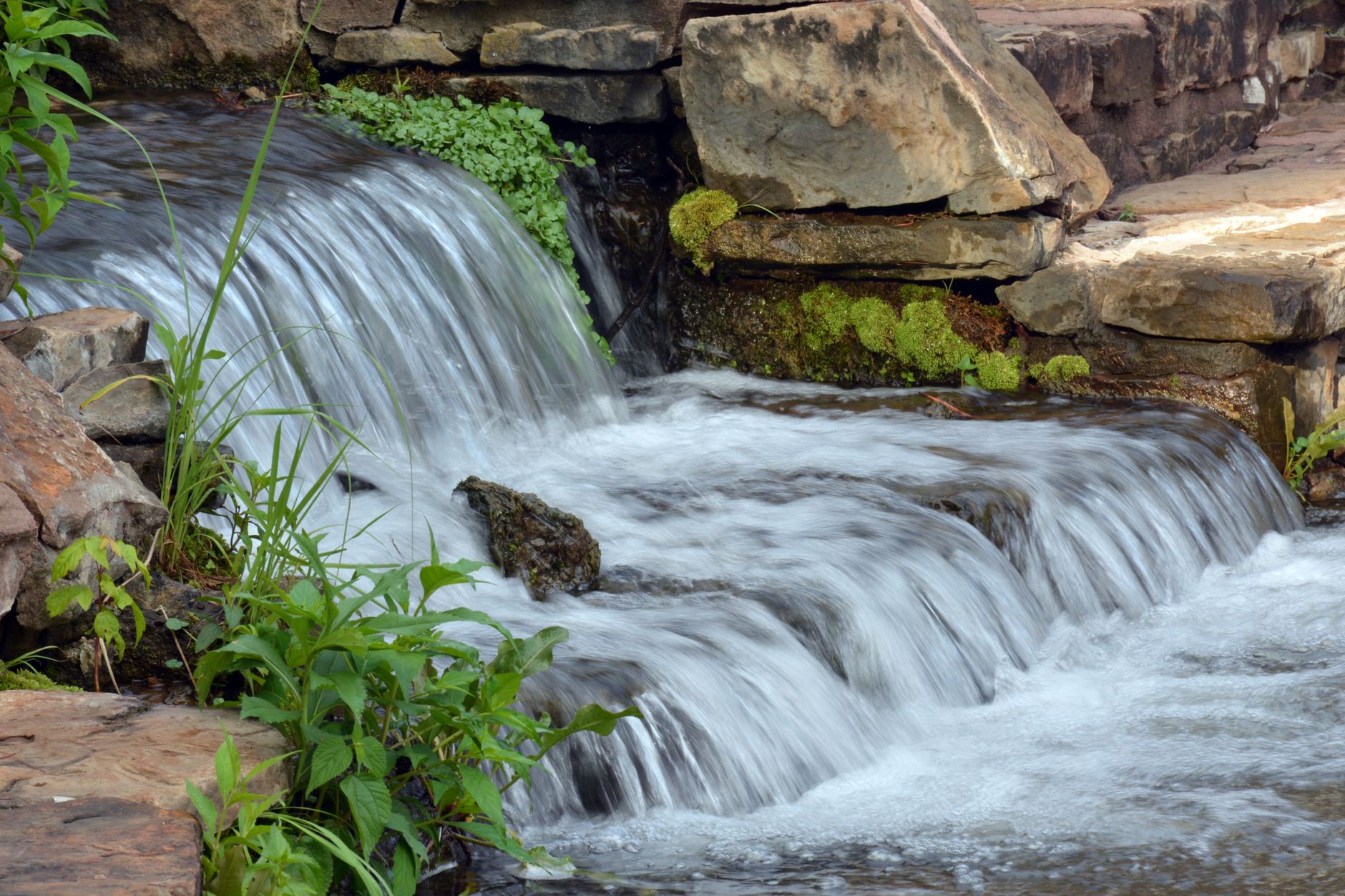
What image comes to mind when you hear the phrase "using groundwater"? You might imagine a pump in a corner of a yard, or a rural well. However, water drawn from deep within the earth is an entirely different story from such shallow water. In this installment, we will explore where water comes from, and why depth is important.
01Shallow Water and Deep Water Are Different
Water underground varies significantly in character depending on its depth. Shallow groundwater, close to the surface, is easily affected by rainwater or nearby streams. Its volume fluctuates with the seasons, and it is vulnerable to surface pollution.
In contrast, water encountered by drilling through deep bedrock is different. As water that has been confined beneath thick bedrock layers for a long time, it is largely unaffected by surface changes. Its volume is stable, and its temperature often remains constant. Even though it's called "groundwater," it is an entirely different kind of water depending on how deep it comes from.
02What Deep Water Contains
As water passes through the earth, it gradually dissolves and incorporates substances along its path. Therefore, water that has traveled through deep bedrock for a long time contains more minerals than surface water. Indeed, groundwater is known to have higher hardness than surface water. High hardness means that minerals like calcium and magnesium are dissolved in large quantities.
Furthermore, the type of bedrock it has passed through also changes the water's properties. Water that has passed through bedrock layers like granite or limestone for a long time tends to be alkaline and may contain more components like silicates. The "smooth texture" of the water mentioned in a previous installment originates from this. In essence, depth creates the water's properties.
03The Earth Also Provides Temperature
Another characteristic of deep water is its temperature. The deeper one goes into the earth, the more its temperature gradually rises. Therefore, water drawn from sufficient depths can possess a subtle warmth, unlike cold surface water.
To understand why this is important, recall the previous installment on temperature. Adjusting water to a suitable temperature for water play requires heating or cooling it, which incurs significant costs. However, if the water is already warmed to some extent by the earth from the start, the burden of temperature adjustment is greatly reduced. Water that is warm enough not to require heating is, therefore, a rare asset.
It is also important that the warmth from underground is not affected by seasons. While surface water becomes icy cold in winter and lukewarm in summer, deep water maintains a similar temperature throughout all four seasons. This means that water with a consistent, subtle warmth emerges whether it's spring or autumn. This consistency is precisely what enables water play not confined to the short summer.
04Encountering Deep Water
Of course, obtaining deep water is not easy. One must drill hundreds of meters into the earth, and no one can guarantee whether truly usable water exists below until it is excavated. It is a time-consuming and costly endeavor, and even if water is found, it is followed by procedures to confirm its volume and properties through testing.
Therefore, for places that possess deep water, the process of obtaining that water itself becomes a story. A place that transparently discloses this process—where it drilled, how deep, what kind of water it encountered, and what properties that water possesses—can be seen as confident about its water.
05The Water Undam Park Encountered
The water at Undam Park comes from deep bedrock, approximately six hundred meters underground. It is not shallow well water, but water that has resided beneath thick bedrock for a long time. Consequently, its volume is abundant, and unlike the coldness of the surface, it possesses a subtle warmth. The plans mentioned earlier—filling with fresh water daily, and using warm water without heating even in spring and autumn—are all possible because of this deep water.
What we did to encounter this water will gradually be recorded in other stories on our website (Time of Dedication). It was a process that took no short amount of time: acquiring the land, drilling six hundred meters, encountering the water, and confirming its properties. In the next installment, we will look more closely at the mineral components contained in this water.